Wood remains one of the most trusted and sustainable building materials in modern construction. From timber-frame homes and log cabins to roof structures and interior finishes, wood offers exceptional strength, natural insulation, and timeless appeal. However, even newly installed timber requires proper protection to ensure it remains durable for decades.
Many homeowners assume that because a house is newly built, its timber will never be affected by woodworm, moisture, or fungal decay. In reality, while modern construction standards and treated timber significantly reduce these risks, long-term durability still depends on proper design, moisture management, regular maintenance, and early inspections.
This guide explores the best wood preservation practices for new builds, helping homeowners, builders, and developers protect structural timber while supporting sustainable construction.Visit online https://www.shashel.eu for more details .
Why Wood Preservation Matters in New Homes
New timber is typically in excellent condition, but it is still vulnerable to environmental factors over time.
Without proper care, timber may be affected by:
- Excess moisture
- Woodworm (wood-boring beetles)
- Termites (in some regions)
- Fungal decay
- Mold and mildew
- UV exposure on exterior wood
- Poor ventilation
A proactive maintenance plan helps maximize the lifespan of wooden components and reduces future repair costs.
1. Choose High-Quality Construction Timber
The foundation of long-lasting wood preservation begins with selecting quality materials.
Builders should choose timber that is:
- Structurally graded
- Properly dried
- Suitable for its intended use
- Sourced from reputable suppliers
- Compliant with local building standards
Using high-quality timber reduces the likelihood of defects and improves long-term performance.
2. Use Appropriate Preservative Treatments
Many structural timbers used in modern construction are factory-treated with approved preservatives before installation.
These treatments help protect wood against:
- Wood-boring insects
- Fungal decay
- Moisture-related deterioration
The type of treatment should match the timber’s intended use and exposure conditions. Always follow local building regulations and manufacturer recommendations.
3. Design for Moisture Control
Moisture is one of the leading causes of timber deterioration.
Good building design should include:
- Effective roof drainage
- Proper flashing around windows and doors
- Damp-proof barriers where required
- Well-designed foundations
- Adequate ground clearance for exterior timber
Keeping timber dry is one of the most effective preservation strategies.
4. Ensure Proper Ventilation
Good airflow prevents condensation and helps maintain healthy moisture levels.
Pay attention to:
- Roof spaces
- Crawl spaces
- Basements
- Utility rooms
- Wall cavities where applicable
Proper ventilation reduces the risk of fungal growth and creates less favorable conditions for wood-boring insects.
5. Protect Exterior Timber
Wood exposed to the weather requires additional attention.
Examples include:
- Cladding
- Decking
- Pergolas
- Porch posts
- Fencing
Maintain protective coatings or finishes according to the manufacturer’s recommendations to reduce moisture absorption and weathering.
6. Schedule Routine Inspections
Even newly built homes benefit from regular inspections.
Check for:
- Water leaks
- Cracks in timber
- Signs of dampness
- Exit holes
- Frass (fine wood dust)
- Soft or weakened wood
Annual inspections allow problems to be addressed before serious damage develops.
7. Control Indoor Humidity
Maintaining balanced indoor humidity helps protect structural timber.
Excessive humidity may encourage:
- Condensation
- Mold growth
- Moisture-related timber movement
Very dry conditions can also contribute to shrinking or cracking in some wooden components.
Using proper ventilation and, where necessary, dehumidifiers helps maintain stable conditions.
8. Prevent Water Damage
Small leaks can cause significant long-term problems if left untreated.
Inspect regularly:
- Roof coverings
- Gutters
- Downpipes
- Plumbing systems
- Window seals
- Exterior joints
Prompt repairs help preserve timber and reduce future maintenance costs.
9. Monitor for Wood-Boring Insects
Although new homes are less likely to experience woodworm than older properties, infestations can still occur if conditions become favorable.
Watch for:
- Small round exit holes
- Powdery wood dust
- Adult beetles near windows
- Weak timber
Early identification makes treatment more effective and helps preserve structural wood.
10. Consider Modern Treatment Technologies
If a localized woodworm infestation is discovered, several professional treatment options are available.
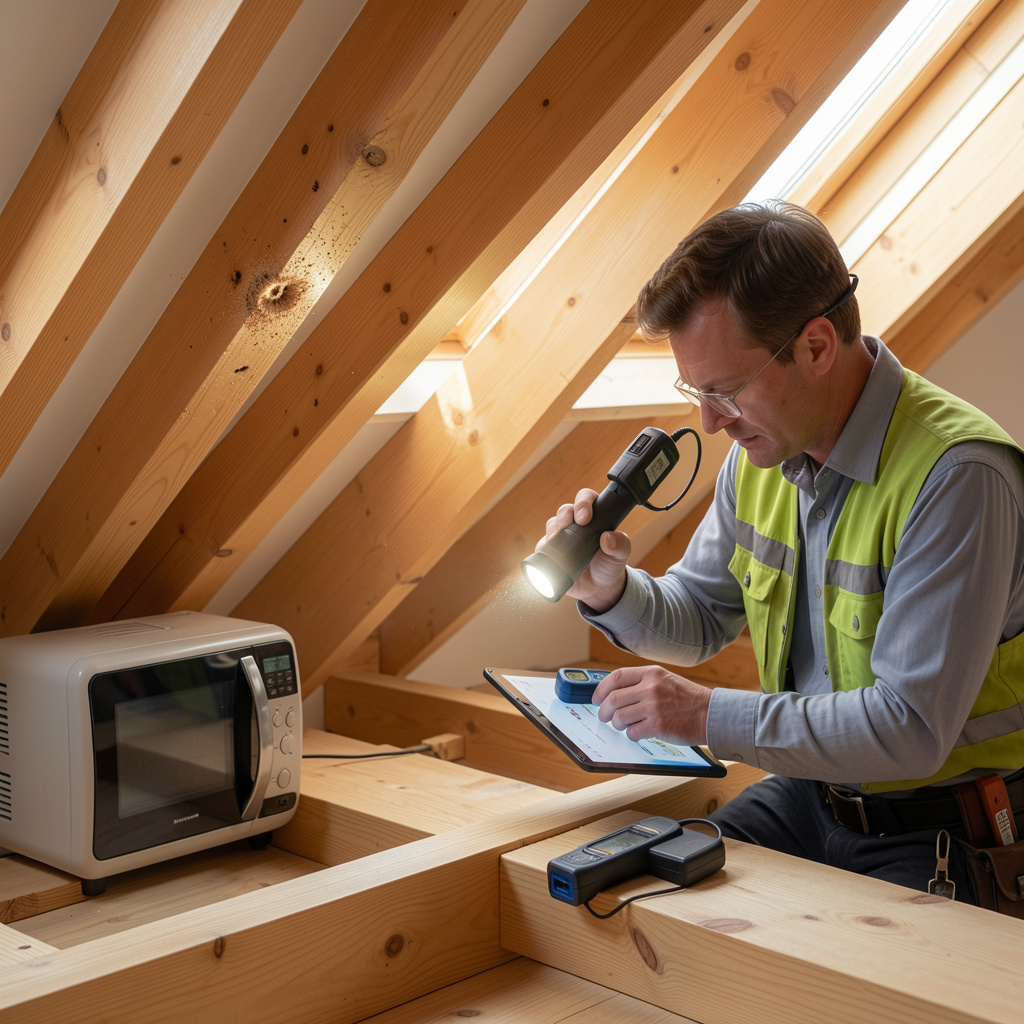
One increasingly popular chemical-free solution is microwave woodworm treatment.
Professional microwave equipment generates controlled heat inside timber through dielectric heating, eliminating:
- Woodworm larvae
- Beetle eggs
- Pupae
- Adult wood-boring beetles
Benefits
- Chemical-free
- No pesticide residues
- Localized treatment
- Environmentally responsible
- Preserves original timber
- Suitable for many residential buildings
A timber preservation specialist can determine whether this treatment is appropriate for your situation.
Integrated Pest Management (IPM)
Many modern pest control professionals recommend Integrated Pest Management (IPM) for long-term timber protection.
IPM combines:
- Routine inspections
- Moisture management
- Accurate pest identification
- Building maintenance
- Physical exclusion
- Targeted treatment only when necessary
Rather than relying solely on pesticides, IPM focuses on preventing infestations before they become serious.
Wood Preservation Checklist for New Builds
To maximize the lifespan of your timber:
- Use quality construction timber.
- Keep wood dry.
- Maintain proper ventilation.
- Repair leaks immediately.
- Inspect timber annually.
- Protect exterior wood finishes.
- Monitor for signs of pests.
- Schedule professional inspections when necessary.
Following these practices helps reduce maintenance costs and extend the life of your home.
Common Myths About New Timber
Myth 1: New Homes Can’t Get Woodworm
Fact: While less common, new timber can still become infested if environmental conditions encourage wood-boring beetles.
Myth 2: Factory-Treated Timber Never Needs Maintenance
Fact: Treated timber offers additional protection, but regular inspections and moisture control remain essential.
Myth 3: Wood Preservation Is Only Necessary Outdoors
Fact: Interior structural timber also benefits from moisture management, ventilation, and routine inspections.
Preventive Maintenance vs. Major Repairs
| Feature | Preventive Maintenance | Major Repairs |
|---|---|---|
| Cost | Lower | Higher |
| Timber Preservation | Excellent | May require replacement |
| Structural Damage | Often prevented | Already present |
| Property Value | Better protected | Can be reduced if damage is extensive |
Preventive maintenance is one of the best long-term investments for any new property.
When Should You Contact a Professional?
Professional advice is recommended if:
- Fresh frass appears.
- New exit holes develop.
- Structural timber shows signs of weakening.
- Moisture problems persist.
- Exterior timber begins to deteriorate.
- You’re considering microwave woodworm treatment for a localized infestation.
A qualified timber preservation specialist can assess your property, identify any developing issues, and recommend the most appropriate maintenance or treatment plan.
Conclusion
The best wood preservation strategy for new builds begins long before problems appear. Choosing high-quality timber, controlling moisture, maintaining proper ventilation, inspecting the structure regularly, and addressing minor issues early all contribute to the long-term durability of wooden homes. While factory-treated timber provides valuable protection, ongoing maintenance remains essential throughout the life of the building.
If wood-boring insects are detected, professional solutions—including approved chemical treatments and modern chemical-free technologies such as microwave woodworm treatment—can help protect structural timber while preserving the home’s original materials. With consistent care and proactive maintenance, a well-built timber home can remain strong, beautiful, and structurally sound for generations.